By Richard Kendall
BISHOPS HEAD – Long before morning’s first light, a group of faces familiar to each other have assembled around long, cat’s eye green tables at the Dorchester Crab Company.
They need few tools: many use only their favorite knife but primarily their hands. Their obstacle is hundreds of pounds of crab shells and innards. Their goal for the day: pick as many pounds of pure Chesapeake Bay Blue Crab meat as they can bowl.
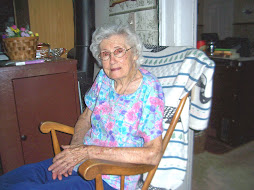
The youngest is a Mexican woman in her early 20’s. The oldest is Dora Pearl Pritchett Murphy.
Born April 17, 1918, Ms. Dora - as she is adoringly referred to by her many friends and neighbors – is 90 and still working 6 days a week during crab season.
When work commences at 4 a.m., conversations among the workers drops off to a hushed silence. Only the sounds of their picking are heard as they concentrate on their work.
They take a break at 5 a.m. Some sip coffee, others dig into their lunch pail for a snack from home. Fifteen minutes later, it’s back to work. Their next break is at 7:30 a.m. After that, they work until quitting time at 11:30 a.m.
Ms. Dora picked her first crab when she was about 4 years old when both of her parents worked at a crab house in Wingate, at the end of Crab House Road.
“They worked for Mr. George Robinson and Mr. Will Dean,” she recalled. “That crab house was destroyed during Hurricane Hazel (in October, 1954).”
While her parents worked, young Dora would drag a ¾ bushel basket over to the counter where her mother and father stood picking. She remembers cracking crab claws.
Her father was Hilary Pritchett of Wingate and mother, Adedia Meredith. Home for young Dora was Toddville but she moved for a while to Cambridge, to a house that still stands near the corner of Cedar Street and Academy Street. It was the home of her grand parents.
“My mother worked then at a shirt factory on Academy Street,” she said. “I used to go down and wave at mother through the window while she was sewing.” The dilapidated, brown brick building is still there, many years after the last piece of apparel was stitched together.
When Ms. Dora was 13, she quit school to care for her younger brother, Edward.
“It was during the Depression and my mother and father had to work,” she explained. “Back then it wasn’t required to stay in school.”
At 16, she took a job with Phillips Packing Company, in Cambridge. She was placed in front of a conveyor belt and was to watch string beans as they passed along in front of her, picking out the bad ones.
“I looked at that belt all day long,” she said. “When I got home, guess what my mother had for dinner? String beans!” She quit the Phillips job after one week.
She shucked oysters for 6 years, in Toddville.
“I was pretty good at that,” she admitted. During the summers, Ms. Dora traveled by water across Fishing Bay to Crisfield, Somerset County, to pick strawberries.
“I get seasick,” she said. “But, those boats were big enough and I did all right on them.”
When she was 20, she attracted the attention of Lois Murphy, of Bishops Head, a man of 36 years of age.
“That was at the (Zion United Methodist) church (in) Toddville,” she recalled. “He had lived 3 miles away all my life and I had never seen him before and if I did, I didn’t remember.”
But, Lois Murphy remembered Ms. Dora and before long, he asked her out on a date.
“My father said that if a young man didn’t have the nerve to come and ask him for permission to take out his daughter, he would not be welcome around our house.”
Mr. Murphy did come and ask Mr. Pritchett and Ms. Dora accepted Mr. Murphy’s invitation for a date. But, there was competition.
During one of Ms. Dora’s trips to Crisfield, she had also attracted the attention of Freddie Cullen, a young singer on a radio program that broadcasted from Salisbury.
“Crisfield was too far from home,” Ms. Dora said to explain why she stopped seeing the radio singer.
In 1940, Ms. Dora married Mr. Murphy at the Parsonage of St. Thomas Church, not too far from the home in Bishops Head she would share with Mr. Murphy, a life-long waterman.
But, there was competition.
At least for space in the 4 room home. Both of Mr. Murphy’s parents still lived there along with four of Lois’s ten siblings.
“It was a full house, for sure,” Ms. Dora recalls with a laugh.
Years later, Ms. Dora and her husband bought the house from his parents.
They had two children, Lois Ann, of Linkwood, and Allen, who resides in Michigan.
In 1950, Ms. Dora worked began working at Capt. Spark’s crab house in nearby Wingate.
Years later, the name changed to Dorchester Crab Company and Ms. Dora is still there, picking.
Here are a few interesting facts about Ms. Dora:
Johnny Unitas, of Baltimore Colt fame, often dined at Ms. Dora’s home. How this came about was that one of Ms. Dora’s brothers, Clyde Pritchett, during the 1960’s, was the caretaker at nearby Crab Point Farm. Several well known athletes traveled there to hunt. When they asked Clyde where they might get a home cooked meal, he brought them home. (Ms. Dora is also a good cook). Johnny Unitas, Dennis Gaubatz and Jackie Burkett of the Baltimore Colts became frequent guests, much to the delight of Ms. Dora’s (then) teenaged son, Allen, a big sports fan.
According to genealogy records kept by her daughter Lois Ann, Ms. Dora’s great grand father, Edward Wallace Pritchett (born Oct. 14, 1821, died March 22, 1906), fought at the Battle of Gettysburg. It is not known at this writing whether he fought for the Union or Confederacy during the bloody encounter in Pennsylvania on July 1, 2 and 3, 1863.
Ms. Dora has never smoked.
“Daddy said if he ever caught us with a cigarette he would shove it down our throats,” she stated.
Nor has she ever used alcohol.
“Except for one sip of beer one time,” she recalled from many, many years ago. “I didn’t like it.” That was the end of her drinking experimentation.
Ms. Dora wanted to be an airline stewardess. But, like drinking, that idea never got off the ground.
“My father ruled the roost,” she said. “He did not want me to be an airline stewardess. He told me if I joined up, he would tend to me when I got home. I decided not to risk that.” Ms. Dora has yet to fly in an airplane.
When crabs are out of season, Ms. Dora, an avid reader, spends many hours pouring over her favorite books which of late have been a series of novels based in old west settings.
If there are two things that irk Ms. Dora they are those who make fun of others and in-law jokes.
“I don’t push fun at other people and I don’t like people to push fun at me,” she explained firmly. “And, my in-laws were just so good to me. I don’t like it when people push fun about their in-laws.”
Almost 5 years ago, Bill and Bonnie Cox moved to Bishops Head from Gaithersburg, MD.
“We just wanted to get out of there,” explained Ms. Cox, who formerly worked for a financial institution before moving to the Eastern Shore.
After scouting out the location of their new home, in Bishops Head, they found a most beautiful sunset.
“I’ve been to Aruba and I’ve been to Barbados,” Ms. Cox said. “But, I have never seen a more beautiful sunset than here in Bishops Head.”
One day, Ms. Cox knocked on the door of a house in their new neighborhood.
“An old lady came to the door,” Mrs. Cox recalled. “I asked her if I could walk behind her house, down to the water, to look at the sunset.”
Ms. Dora told her yes, she could walk to the water’s edge to take in the hues and colors of the setting sun over the Honga River. That was the beginning of a friendship. Neighbors in these parts carefully look out for one another but that does mean they don’t have fun. Trips to town can become an adventure. Festivals are seldom overlooked. Crab feasts are a must.
“I love crabs,” Ms. Dora stated. “And, fresh tomatoes!”
To share their fun, Mrs. Cox created an internet blog which is now enjoyed by family and friends as far away as Pennsylvania and elsewhere.
“I just want people to know that Ms. Dora is 90 and still having fun!” Mrs. Cox said with enthusiasm.
Ms. Dora does not want to stay up too late during the week because her alarm clock sounds at 1: 45 a.m. After making her bed, getting herself ready, downing a few Ritz crackers and some orange juice, Ms. Dora Murphy is ready pick crabs.
Saturday, September 27, 2008

Robert Cannon, Cambridge waterman, turns 86.
Robert Cannon, Cambridge waterman, turns 86.
By Richard Kendall
CAMBRIDGE - Recently, an article was published in this newspaper regarding Crawford Windsor, Sr., of Crocheron, who was said to be the oldest known waterman still working in Dorchester County.
The following day, Charlotte Robinson of Cambridge contacted the Banner to report that her father, Robert H. Cannon, a waterman older than Mr. Windsor, was still working long hours every day on the Choptank River. A reporter investigated.
On Thursday, Mr. Cannon was found at the docks on Trenton Street, in Cambridge. He sat on his boat, the Charlotte Ann, attaching fresh chicken necks to white, braided rope, one after another, in preparation for Friday’s trot line.
With a warm smile and contagious laughter, he continued baiting his line as colorful details emerged of his long, productive life. He spoke of his upbringing on Academy Street in Cambridge and joining his father to work on the water; of military service in World War II along with a group of fellow Dorchester County enlistees who served together in the South Pacific.
He recalled the plight of his pet monkey who found a watery grave; and a mysterious illness that plagued him upon his return to the States; and the joy of meeting and marrying the love of his life, and of close friends he has met along the way including Crawford Windsor, Sr., of Crocheron.
At age 15, Robert H. Cannon followed his father and grandfather to a career on the water. The elder Cannons, Ogle B. and Burgoine, respectively, had been dredge boat Captains, harvesting oysters present in abundant quantities at that time.
“I worked with my father until 1943,” Mr. Cannon recalled. “Then, a bunch of us from
Hoopers Island, Fishing Creek, Toddville, Wingate, Crocheron, we all enlisted in the Army.” Mr. Cannon was 18.
“When the Army found out that we were all watermen, they put us in the same unit: Amphibious Engineers, Company B.”
After boot camp in Hyannis, Massachusetts, the young soldiers were sent to amphibious training in Florida. After that, Company B from Dorchester was shipped to the South Pacific, near Manila. They would serve there for two and a half years.
“I was the Captain of an LCM,” Mr. Cannon said. He described the LCM (Landing Craft, Mechanized) as a barge type vessel which allowed quick deployment of troops and vehicles and tanks by landing on a beach and lowering the hull for rapid deployment.
“We lived right on the boat, Mr. Cannon said. “Jim Mills, of Crapo, he was one. Rodney Robinson, of Wingate, was another. Oselee Lewis and Marvin Parks of Wingate were with us. Roger Shockley of Hooper Island was too.”
“Rodney Robinson was the boat’s Engineer,” he recalled. “He kept those two engines running and polished like they just came from the factory.”
Mr. Cannon also recalled another valuable asset (the late) Rodney Robinson brought.
“He was one heck of a cook,” Mr. Cannon remembered. “He made donuts and candy, all kinds of stuff. This was a time when you couldn’t get food like that. He’d fix it right there on the boat.”
While shored up on a Pacific island, Mr. Cannon picked up a small, playful, grayish-black furred monkey and found that the creature was gentle and tame. When it came time for the soldiers to return to their LCM and return to sea, he took the monkey along as a pet. He called it Pete.
“He was a nice little monkey, just as friendly to me as can be. Mr. Cannon said.
About 6 months passed and the war ended. In February, 1946, Mr. Cannon and his Dorchester army buddies received new orders: they were going home. Pete was brought along, headed for Maryland.
The first leg of their return to the U.S. involved being transferred to a state-bound ship. It was not long before an officer spotted Pete frolicking on a bunk bed.
“The officer asked where the monkey came from,” Mr. Cannon recalled. “I told him it was mine that I had as a pet for 6 months and I was taking him home.”
“He (the officer) said the monkey had to be thrown overboard, that Pete could spread disease,” Mr. Cannon said. “They took the monkey and threw him out a port hole. I was pretty upset about that. I thought about that monkey for a long time.”
Upon Robert Cannon’s return to Cambridge, there was little time for celebration before he found himself curled up in bed, too sick to eat or even use the bathroom.
“I got deathly sick, couldn’t walk or do anything,” he recalled as he looped another chicken neck onto his trot line. “Dr. Bunker, our doctor back then, was call in.”
“The doctor told me he didn’t know what was wrong, said he didn’t think he could do anything for me,” Mr. Cannon recalled.
“I told the doctor I had an idea of what was happening,” Mr. Cannon said, continuing:
“For a long time, during the war, I was taking handfuls of Adabrin, a drug that kept us from catching Malaria from the Mosquitoes. After I got back here and stopped taking the Adabrin, that’s when I got sick.”
Relief soon came in the form of Adabrin, fetched from the local pharmacy. Within days
of ingesting the tablets again, Mr. Cannon was feeling better. Within weeks, Robert Cannon felt like himself.
“I weaned myself off of it, a little at a time, and I never had another problem with any of it,” he said.
When it came time to go to work, Mr. Cannon learned from his father that crabs were at that time scarce in the Choptank River. In order to make a living, he and Ogle B., as his father was know, ventured to South Dorchester County where crabs were plentiful in Fishing Bay and the Honga River.
They met Austin Windsor and his son, Crawford, and other watermen from South Dorchester.
“Those people were just as nice to us as they could be,” Mr. Cannon said. “There was never any competition between Cambridge and South County watermen, nothing like that. After a while, it was like we were brothers.”
In 1947, Robert Cannon met and married Margarite “Peggy” Anderson, of Deal Island.
“We were married for 47 years,” he said. “She was the first love of my life.” Mrs. Cannon passed away in 1994. In addition to their daughter Charlotte, they had a son, Robert, Jr.
Through his friendship with the Windsors, Mr. Cannon met Crocheron based boat builder John Elliott.
“In 1954, I asked Mr. Elliott to built two boats for me,” Mr. Cannon said. “During that summer, he built a pretty, little 18 foot boat of white cedar of me and he built the Charlotte Ann which was the last boat he ever built.”
“I’ll tell you, that John Elliott was quite a man,” Mr. Cannon said. “He didn’t have any blue prints to go by. He’d stand back a ways and have two fellows hold boards, telling them to lower the aft, raise forward, that’s how he designed the shape and sheer of this boat ” (referring to the 36’ x 9 ½’ Charlotte Ann).
“Mr. Elliott had a (disabled) wife who he took care of every morning before he’d start his work,” Mr. Cannon said. “I never did see her, but he was an amazing man.”
On October 15, 1954, Hurricane Hazel ripped through the Mid-Atlantic. Robert Cannon recalled that his newly complete vessel, the Charlotte Ann, was nearly lost that day.
“The storm hit and I was up here in Cambridge,” he said. “There was no way in the world I could get down to my boat, tied up in Tedious Creek, in Crocheron.”
“Crawford Windsor’s boat was tied behind mine,” Mr. Cannon said. “He was down there, making sure his boat was tied when he saw that my boat had broken loose.”
“Somehow, Crawford got up in my boat, trying to get it tied up,” he recalled. “The wind was blowing a gale to the East, toward the Bay and Crawford was caught in my boat.”
The vessel drifted helplessly beyond the normal confines of Tedious Creek, over what had been dry land the day before, following a strong current to the Chesapeake.
“When he got to where the old (Crocheron) road is, he hopped out into waste high water.
There was nothing else Crawford could do. The Charlotte Ann kept going with the wind, toward the Bay.”
And then, a twist of fate.
“Don’t you know, after another 15 minutes, the wind shifted to the West North West,” Mr. Cannon said. “And the Charlotte Anne blew right back up into Tedious Creek.”
She was found aground behind a house nearby and later returned safely to her mooring in the creek.
“I never will forget what Crawford Windsor did, trying to save my boat,” he said.
Robert Cannon went into the business of buying oysters and crabs during their respective seasons.
“I’d buy oysters at Long Wharf, paid cash money for them,” Mr. Cannon recalled. He would then transport the delectable, shelled creatures at points West of the Bay Bridge and elsewhere.
“In the summer, I’d buy crabs at Nanticoke Harbor,” he explained. “I’d sell my culled crabs in Cambridge and carry the fat ones to Washington and Baltimore. I did that for 35 years.” In the mid-1980’s, he returned to working full time as a waterman.
Robert Cannon was asked if he agreed with his friend Crawford Windsor Sr.’s regarding the prosperity of future waterman.
“I do,” he said, shaking his head. “A young person can’t come out here anymore and expect to pay for a boat, a house, a car, and raise a family from what he pulls out of the water. Its not like it was when guys like me and Crawford (Windsor) and the others could come out here and make a career out of this.”
Currently, Mr. Cannon works on the water in the summer months, crabbing his trot line in the Choptank River.
“In the winter, I might go out and catch a bushel or two of oysters for myself or to give to friends and neighbors, nothing commercial in the winter. I’m sort of retired, you know?
By Richard Kendall
CAMBRIDGE - Recently, an article was published in this newspaper regarding Crawford Windsor, Sr., of Crocheron, who was said to be the oldest known waterman still working in Dorchester County.
The following day, Charlotte Robinson of Cambridge contacted the Banner to report that her father, Robert H. Cannon, a waterman older than Mr. Windsor, was still working long hours every day on the Choptank River. A reporter investigated.
On Thursday, Mr. Cannon was found at the docks on Trenton Street, in Cambridge. He sat on his boat, the Charlotte Ann, attaching fresh chicken necks to white, braided rope, one after another, in preparation for Friday’s trot line.
With a warm smile and contagious laughter, he continued baiting his line as colorful details emerged of his long, productive life. He spoke of his upbringing on Academy Street in Cambridge and joining his father to work on the water; of military service in World War II along with a group of fellow Dorchester County enlistees who served together in the South Pacific.
He recalled the plight of his pet monkey who found a watery grave; and a mysterious illness that plagued him upon his return to the States; and the joy of meeting and marrying the love of his life, and of close friends he has met along the way including Crawford Windsor, Sr., of Crocheron.
At age 15, Robert H. Cannon followed his father and grandfather to a career on the water. The elder Cannons, Ogle B. and Burgoine, respectively, had been dredge boat Captains, harvesting oysters present in abundant quantities at that time.
“I worked with my father until 1943,” Mr. Cannon recalled. “Then, a bunch of us from
Hoopers Island, Fishing Creek, Toddville, Wingate, Crocheron, we all enlisted in the Army.” Mr. Cannon was 18.
“When the Army found out that we were all watermen, they put us in the same unit: Amphibious Engineers, Company B.”
After boot camp in Hyannis, Massachusetts, the young soldiers were sent to amphibious training in Florida. After that, Company B from Dorchester was shipped to the South Pacific, near Manila. They would serve there for two and a half years.
“I was the Captain of an LCM,” Mr. Cannon said. He described the LCM (Landing Craft, Mechanized) as a barge type vessel which allowed quick deployment of troops and vehicles and tanks by landing on a beach and lowering the hull for rapid deployment.
“We lived right on the boat, Mr. Cannon said. “Jim Mills, of Crapo, he was one. Rodney Robinson, of Wingate, was another. Oselee Lewis and Marvin Parks of Wingate were with us. Roger Shockley of Hooper Island was too.”
“Rodney Robinson was the boat’s Engineer,” he recalled. “He kept those two engines running and polished like they just came from the factory.”
Mr. Cannon also recalled another valuable asset (the late) Rodney Robinson brought.
“He was one heck of a cook,” Mr. Cannon remembered. “He made donuts and candy, all kinds of stuff. This was a time when you couldn’t get food like that. He’d fix it right there on the boat.”
While shored up on a Pacific island, Mr. Cannon picked up a small, playful, grayish-black furred monkey and found that the creature was gentle and tame. When it came time for the soldiers to return to their LCM and return to sea, he took the monkey along as a pet. He called it Pete.
“He was a nice little monkey, just as friendly to me as can be. Mr. Cannon said.
About 6 months passed and the war ended. In February, 1946, Mr. Cannon and his Dorchester army buddies received new orders: they were going home. Pete was brought along, headed for Maryland.
The first leg of their return to the U.S. involved being transferred to a state-bound ship. It was not long before an officer spotted Pete frolicking on a bunk bed.
“The officer asked where the monkey came from,” Mr. Cannon recalled. “I told him it was mine that I had as a pet for 6 months and I was taking him home.”
“He (the officer) said the monkey had to be thrown overboard, that Pete could spread disease,” Mr. Cannon said. “They took the monkey and threw him out a port hole. I was pretty upset about that. I thought about that monkey for a long time.”
Upon Robert Cannon’s return to Cambridge, there was little time for celebration before he found himself curled up in bed, too sick to eat or even use the bathroom.
“I got deathly sick, couldn’t walk or do anything,” he recalled as he looped another chicken neck onto his trot line. “Dr. Bunker, our doctor back then, was call in.”
“The doctor told me he didn’t know what was wrong, said he didn’t think he could do anything for me,” Mr. Cannon recalled.
“I told the doctor I had an idea of what was happening,” Mr. Cannon said, continuing:
“For a long time, during the war, I was taking handfuls of Adabrin, a drug that kept us from catching Malaria from the Mosquitoes. After I got back here and stopped taking the Adabrin, that’s when I got sick.”
Relief soon came in the form of Adabrin, fetched from the local pharmacy. Within days
of ingesting the tablets again, Mr. Cannon was feeling better. Within weeks, Robert Cannon felt like himself.
“I weaned myself off of it, a little at a time, and I never had another problem with any of it,” he said.
When it came time to go to work, Mr. Cannon learned from his father that crabs were at that time scarce in the Choptank River. In order to make a living, he and Ogle B., as his father was know, ventured to South Dorchester County where crabs were plentiful in Fishing Bay and the Honga River.
They met Austin Windsor and his son, Crawford, and other watermen from South Dorchester.
“Those people were just as nice to us as they could be,” Mr. Cannon said. “There was never any competition between Cambridge and South County watermen, nothing like that. After a while, it was like we were brothers.”
In 1947, Robert Cannon met and married Margarite “Peggy” Anderson, of Deal Island.
“We were married for 47 years,” he said. “She was the first love of my life.” Mrs. Cannon passed away in 1994. In addition to their daughter Charlotte, they had a son, Robert, Jr.
Through his friendship with the Windsors, Mr. Cannon met Crocheron based boat builder John Elliott.
“In 1954, I asked Mr. Elliott to built two boats for me,” Mr. Cannon said. “During that summer, he built a pretty, little 18 foot boat of white cedar of me and he built the Charlotte Ann which was the last boat he ever built.”
“I’ll tell you, that John Elliott was quite a man,” Mr. Cannon said. “He didn’t have any blue prints to go by. He’d stand back a ways and have two fellows hold boards, telling them to lower the aft, raise forward, that’s how he designed the shape and sheer of this boat ” (referring to the 36’ x 9 ½’ Charlotte Ann).
“Mr. Elliott had a (disabled) wife who he took care of every morning before he’d start his work,” Mr. Cannon said. “I never did see her, but he was an amazing man.”
On October 15, 1954, Hurricane Hazel ripped through the Mid-Atlantic. Robert Cannon recalled that his newly complete vessel, the Charlotte Ann, was nearly lost that day.
“The storm hit and I was up here in Cambridge,” he said. “There was no way in the world I could get down to my boat, tied up in Tedious Creek, in Crocheron.”
“Crawford Windsor’s boat was tied behind mine,” Mr. Cannon said. “He was down there, making sure his boat was tied when he saw that my boat had broken loose.”
“Somehow, Crawford got up in my boat, trying to get it tied up,” he recalled. “The wind was blowing a gale to the East, toward the Bay and Crawford was caught in my boat.”
The vessel drifted helplessly beyond the normal confines of Tedious Creek, over what had been dry land the day before, following a strong current to the Chesapeake.
“When he got to where the old (Crocheron) road is, he hopped out into waste high water.
There was nothing else Crawford could do. The Charlotte Ann kept going with the wind, toward the Bay.”
And then, a twist of fate.
“Don’t you know, after another 15 minutes, the wind shifted to the West North West,” Mr. Cannon said. “And the Charlotte Anne blew right back up into Tedious Creek.”
She was found aground behind a house nearby and later returned safely to her mooring in the creek.
“I never will forget what Crawford Windsor did, trying to save my boat,” he said.
Robert Cannon went into the business of buying oysters and crabs during their respective seasons.
“I’d buy oysters at Long Wharf, paid cash money for them,” Mr. Cannon recalled. He would then transport the delectable, shelled creatures at points West of the Bay Bridge and elsewhere.
“In the summer, I’d buy crabs at Nanticoke Harbor,” he explained. “I’d sell my culled crabs in Cambridge and carry the fat ones to Washington and Baltimore. I did that for 35 years.” In the mid-1980’s, he returned to working full time as a waterman.
Robert Cannon was asked if he agreed with his friend Crawford Windsor Sr.’s regarding the prosperity of future waterman.
“I do,” he said, shaking his head. “A young person can’t come out here anymore and expect to pay for a boat, a house, a car, and raise a family from what he pulls out of the water. Its not like it was when guys like me and Crawford (Windsor) and the others could come out here and make a career out of this.”
Currently, Mr. Cannon works on the water in the summer months, crabbing his trot line in the Choptank River.
“In the winter, I might go out and catch a bushel or two of oysters for myself or to give to friends and neighbors, nothing commercial in the winter. I’m sort of retired, you know?
Friday, September 26, 2008
Welcome!
Welcome to my blog, "Appreciating Maryland's Eastern Shore." Posted here will be articles I have written about the people and culture of Maryland's Eastern Shore, primarily the Mid-Shore region of Cambridge and Dorchester County.
My family relocated to the Eastern Shore 8 years ago from the Washington Metropolitan area. I have found the culture and natural beauty of "the Shore" captivating and charming.
Please check out the articles and if you choose to, kindly share your thoughts. Thanks! Richard
My family relocated to the Eastern Shore 8 years ago from the Washington Metropolitan area. I have found the culture and natural beauty of "the Shore" captivating and charming.
Please check out the articles and if you choose to, kindly share your thoughts. Thanks! Richard
Subscribe to:
Posts (Atom)




 Posts
Posts